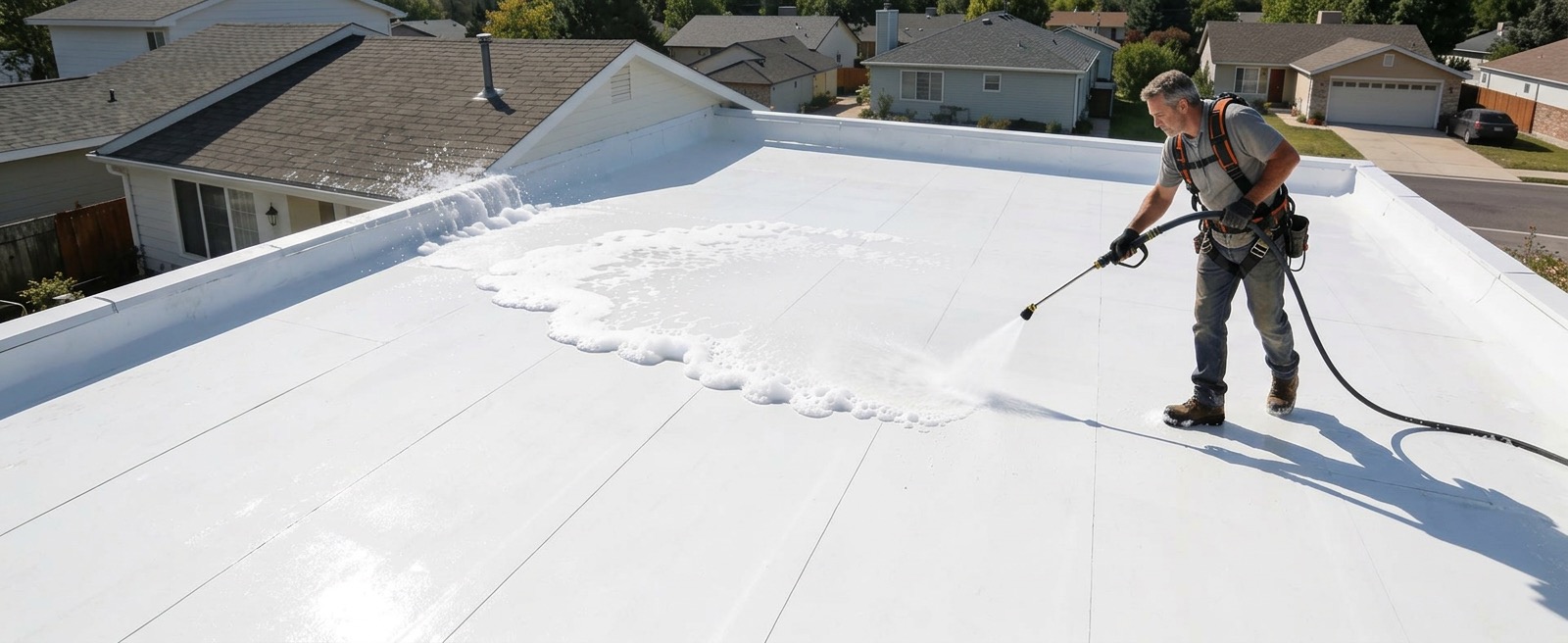
California’s rainy season — typically running from November through April — is the true test of your roof’s health. After months of dry summer heat that causes materials to contract and crack, the first heavy rains expose every vulnerability. A little preparation in October can prevent thousands of dollars in water damage repairs come February.
1. Schedule a Pre-Season Roof Inspection
The most important thing you can do is have a licensed roofing contractor inspect your roof before the season starts — ideally in September or October. A professional inspection catches issues invisible from the ground: small cracks in flashing, deteriorating sealant around vents and skylights, lifted shingles at the ridge, and soft spots in the deck. Eco Smart Roofer uses thermal imaging in our assessments to detect moisture trapped beneath the surface — something a visual inspection alone can miss.
2. Clean Your Gutters and Downspouts
Clogged gutters are one of the leading causes of roof damage in San Francisco. When gutters overflow, water backs up under the roof edge and seeps into the fascia and soffit, causing wood rot and mold. In SF neighborhoods with mature tree cover — like Cole Valley, Forest Hill, and Twin Peaks — gutters can fill rapidly. Clean them before the first rain, and check that downspouts direct water at least 6 feet away from your foundation.
3. Trim Overhanging Tree Branches
Branches overhanging your roof drop debris that accelerates moss growth, and in a winter storm they can snap and cause structural damage. The Bay Area’s atmospheric river events regularly bring wind gusts over 40 mph to San Francisco. Trim any branches within 6 feet of your roof before October, and remove any dead limbs from nearby trees entirely.
4. Inspect and Reseal Flashing
Flashing — the metal strips sealing joints between your roof and chimneys, skylights, vent pipes, and dormers — is the most common water entry point. The sealant contracts and cracks during summer heat and needs annual inspection and resealing. Improperly sealed flashing is one of the most common causes of expensive interior water damage in Bay Area homes.
5. Check Your Attic Ventilation
Proper attic ventilation prevents moisture buildup during the rainy season. Without it, warm moist air condenses on the cold roof deck, causing mold and wood rot that looks exactly like a roof leak but comes from inside. Check that your attic vents are unobstructed and that insulation isn’t blocking soffit vents.
6. Address Small Repairs Immediately
If your inspection reveals any issues — even minor ones like lifted shingles or cracked caulking — get them fixed before the rains arrive. A minor flashing repair that costs a few hundred dollars now can prevent a $10,000+ interior remediation project if left until spring.
Emergency Leak Response
If you discover an active leak during the rainy season, act immediately. Do not attempt to go on a wet roof — SF roofs are steep and dangerous when wet. Document the damage with photos for insurance purposes, then call a professional. Eco Smart Roofer provides emergency roof repair services across San Francisco and the Greater Bay Area. Call us at (415) 240-9840 for fast, professional response.